
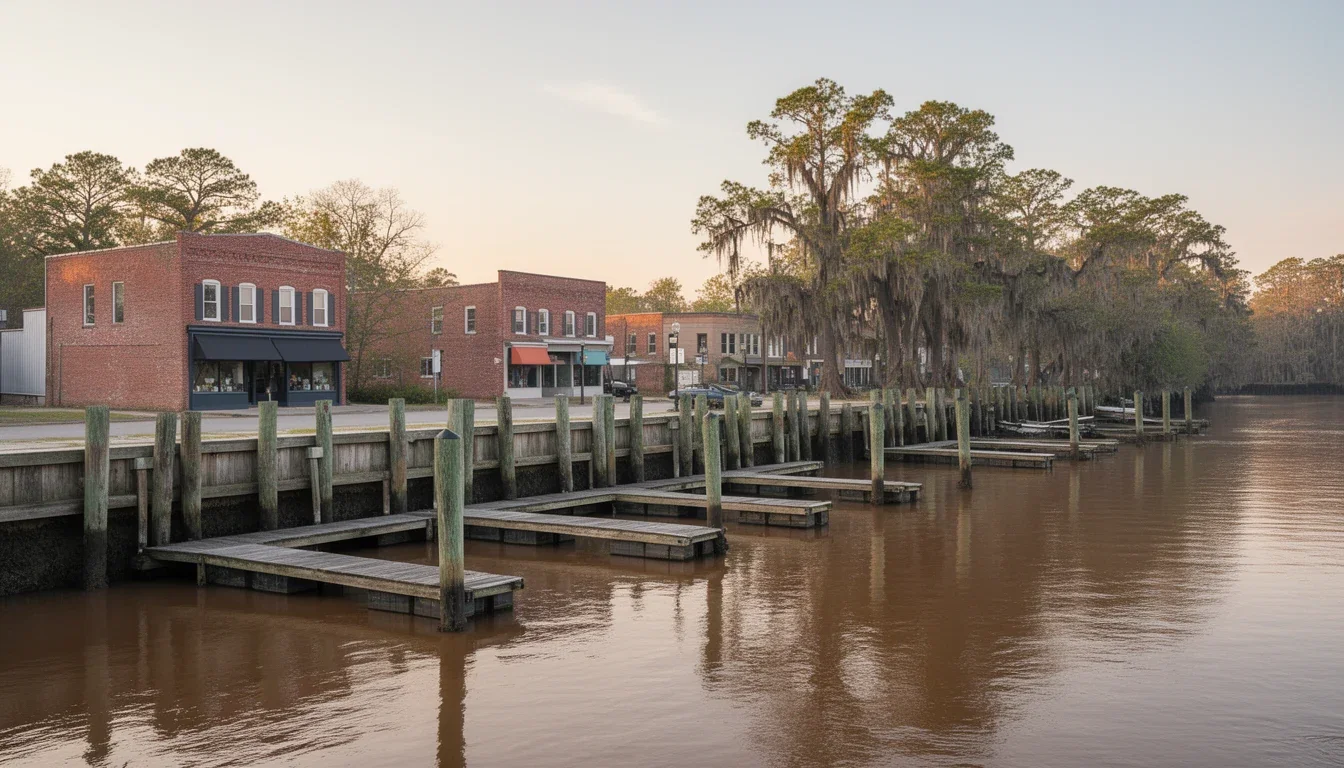
Coming down the Pasquotank River from the north, you pass the last of the cypress and the no-wake signs, and then the town opens up on your starboard side. Brick warehouses sit above a bulkhead, halyards clink against masts at the city docks, and a row of empty slips waits with nobody standing at a gate to collect. If you are used to calling ahead and paying for a slip in a strange town, that is the first thing that surprises you here.
Elizabeth City is a working river town that happens to be on the Atlantic Intracoastal Waterway, and the boating life here is not a resort amenity bolted onto a downtown. It is the reason the downtown exists. Here is what a boater actually gets, and what it costs.
1. The city hands you a slip downtown, and it does not charge you
Mariners’ Wharf is at 202 South Water Street, on the Pasquotank in the middle of downtown. The city keeps 14 transient slips there and offers them on a complimentary basis for up to 48 hours, first come and first served, with no reservations taken. Step off the boat and you are on the riverwalk, two minutes from coffee and a block from the commercial core.
The reason the slips exist goes back to a group of volunteers called the Rose Buddies, who started meeting visiting boats at the wharf decades ago with local information, a rose, and sometimes wine and cheese. The tradition stuck hard enough that it gave the city its nickname, the Harbor of Hospitality, and it is still the thing transient cruisers mention first when they talk about stopping here.
The honest caveat: 14 slips, no reservations. In the fall migration, when the snowbird fleet runs south, they fill early in the afternoon. Arrive at 4 p.m. in late October and you may be anchoring out or looking at a marina.
2. You come in on a canal that opened in 1805
The Dismal Swamp Canal runs about 22 miles from Deep Creek, Virginia to South Mills, North Carolina, and it opened in 1805. It is described as the oldest continually operating hand-dug waterway in the country, and it is the alternate Atlantic Intracoastal Waterway route between the Chesapeake Bay and the Albemarle Sound. From the South Mills end, the Pasquotank River does the rest of the work and puts you in Elizabeth City.
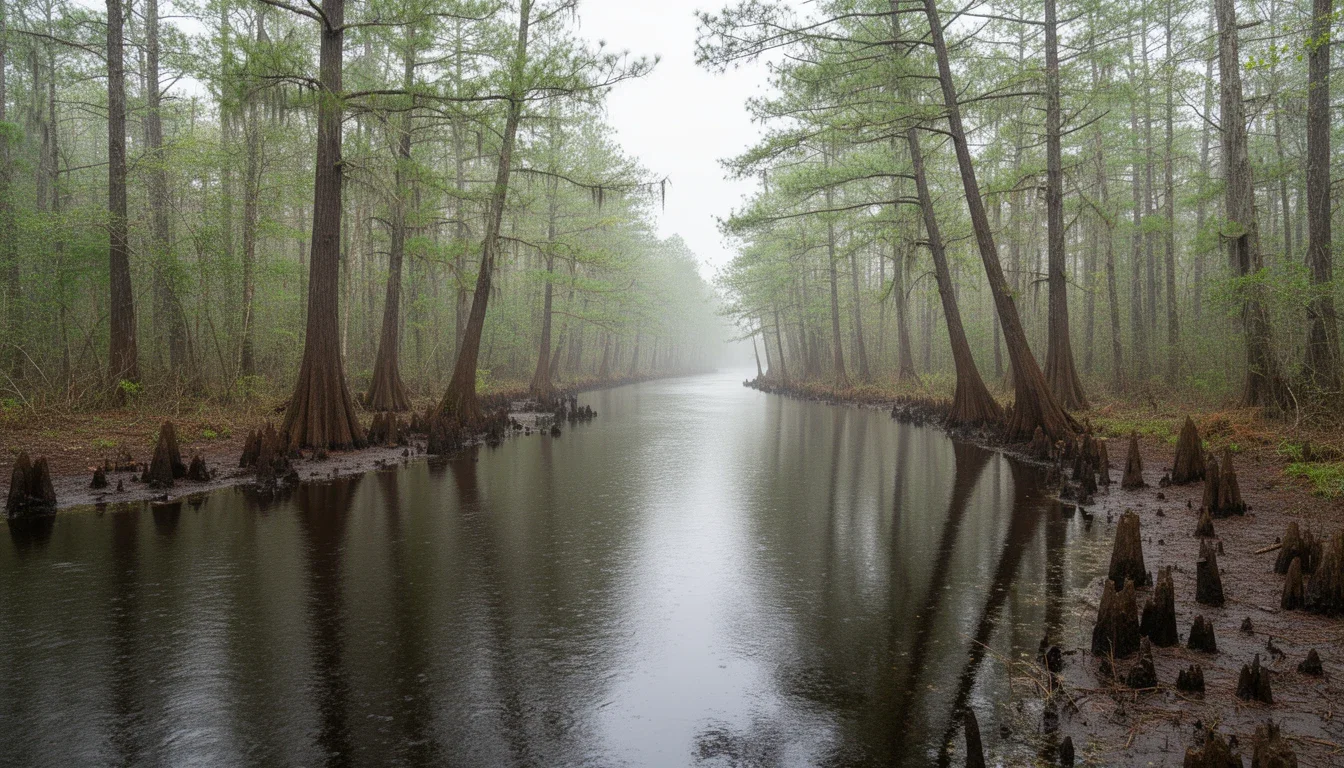
The passage itself is the point. The water runs dark with tannin, the banks are cypress and tupelo, herons stand in the shallows, and the whole corridor is no-wake, so you are not fighting a sea state or a schedule. You are easing along at six or seven knots with the engine muttering and the swamp doing what swamps do. A boat that has been pounded for three days on open water gets a quiet afternoon here.
3. The other Intracoastal route is your backup plan
At the junction near Great Bridge, Virginia, the waterway splits. The Dismal Swamp Canal is the western option with two locks. The Virginia Cut is the primary route, deeper and busier, running through Coinjock on its way to the Albemarle Sound. Boaters who run the waterway regularly treat the pair as a choice, not a default, because each has conditions the other does not.
That matters here, because the canal is not always open. Storm damage and shoaling have closed it for months at a stretch, most recently after Hurricane Matthew, when it stayed shut until the Army Corps of Engineers finished clearing and dredging it the following fall. If the canal is closed, the Virginia Cut keeps you moving, and you can still reach Elizabeth City from the sound. If the canal is open and the sound is nasty, the canal is the calm way through. Either way, you have options that a lot of river towns do not.
4. The river runs through the middle of downtown
Most waterfront towns put their water at the edge and their commerce a mile inland. Elizabeth City put a river through the front yard. The Pasquotank runs past Mariners’ Wharf and Waterfront Park, where the city maintains public boat ramps with trailer parking, so a trailerable boat is a ten-minute operation, not a day trip.
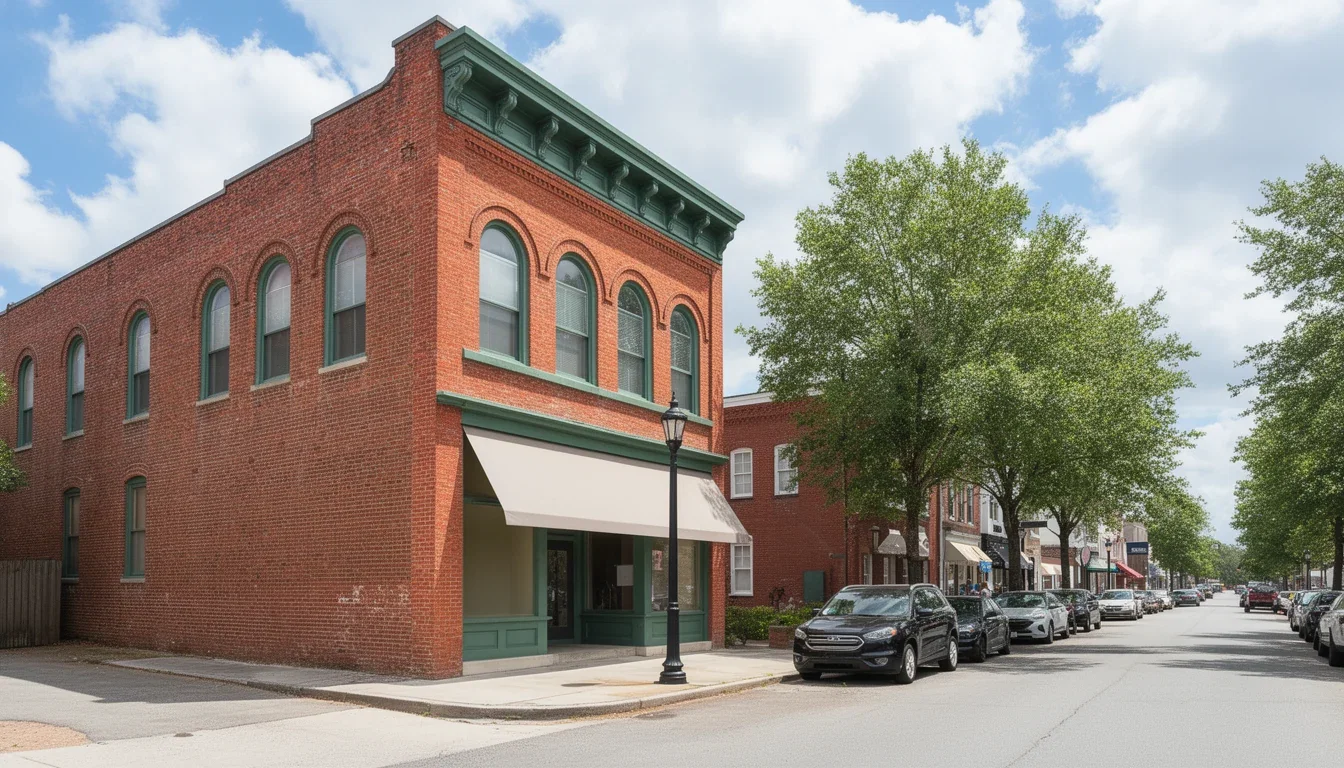
For a smaller boat, College Park at 400 South Water Street has a ramp into Charles Creek. The downtown side is walkable from the water, which is unusual: coffee at Muddy Waters Coffeehouse on West Main, a farmers’ market at the wharf on Saturday mornings in season, free outdoor concerts on the waterfront lawn in summer, and the Museum of the Albemarle for a rainy afternoon.
5. You can get out on the water without owning a boat
Not every buyer arrives with a hull in the driveway, and the city has an answer for that. College Park has a kayak kiosk where you scan a code and rent a boat for an hour, and Coast Guard Park on Riverside Avenue includes a boardwalk, a fishing pier, and canoe and kayak access on the Pasquotank and Charles Creek.
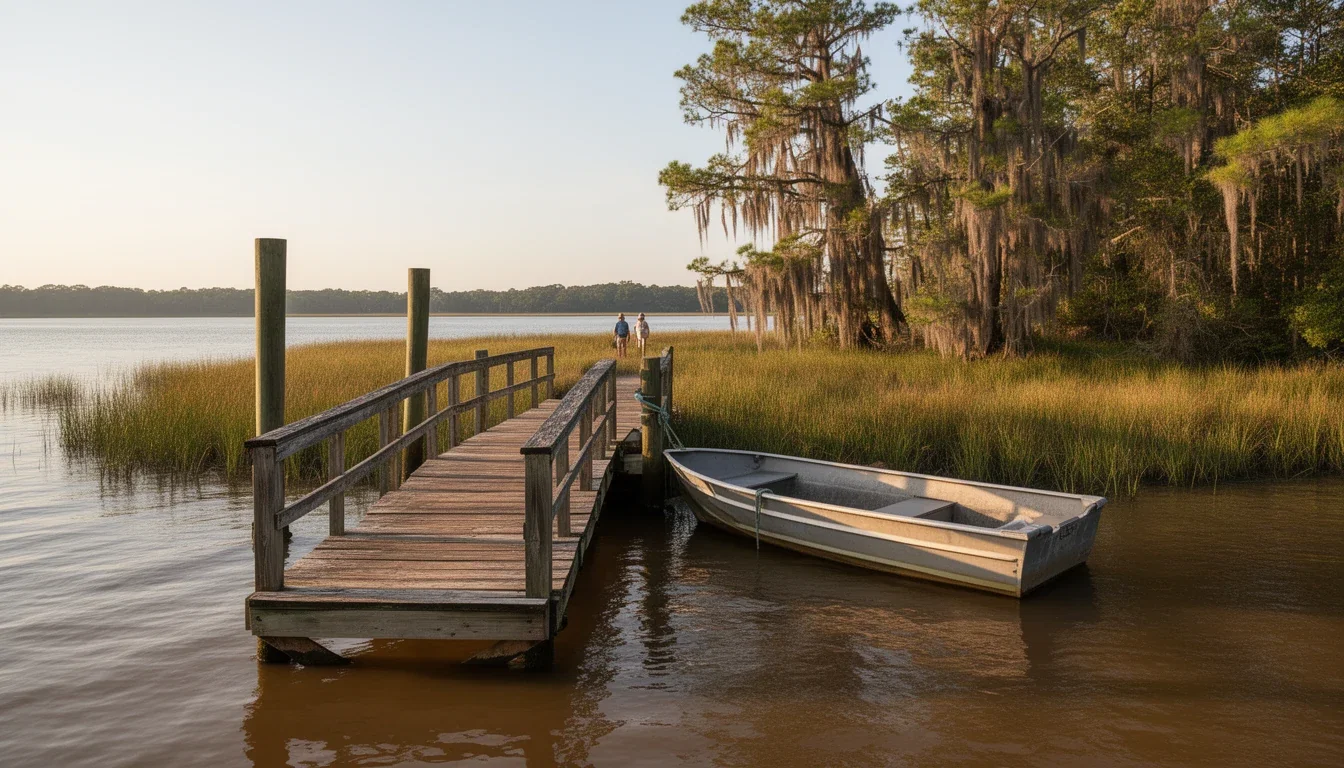
The rowing and sailing crowd has a home on that same stretch of river, and if you want more than a paddle, Dismal Swamp State Park is about 25 minutes north on US-17, with 20-plus miles of trails and canoe access straight into the canal. You can spend a weekend on the water here before you own a single piece of marine equipment.
6. The water on both sides of town is protected water
This is a river town on a broad sound, not a beach town on the ocean. Run north and you are in a canal behind trees. Run south and you are on the Pasquotank headed for the Albemarle Sound, which is shallow, wide, and choppy in a blow but never rolling ocean swell. For an owner with a center console, a trawler, or a small sailboat, that geography is the whole argument.
The constraints are real and you should know them before you buy. This is skinny water in places, so you run the channel, watch the sounder, and learn where the shoals sit. The canal locks open four times a day, at 8:30 a.m., 11:00 a.m., 1:30 p.m., and 3:30 p.m., so the canal sets your departure time rather than your watch. And a tropical system in the fall can strip the canal of its markers and close it while it is dredged. None of that is a dealbreaker. It is the price of protected water.
7. The buying decision gets simpler once you know which water you want
Boaters shopping Elizabeth City split into two groups, and the price difference between them is significant. True river frontage with your own dock carries a premium, plus a flood zone conversation, bulkhead and dock maintenance, and a state coastal permit for anything you build in or over the water or close to the shoreline. Water-near property, meaning a house a short walk from the wharf or the riverwalk, gives you the same river without the seawall bill.
There is a middle path that a lot of boaters take: buy the house you want inland and rent a slip. Hattie Creef Marina on the Camden Causeway side keeps transient and long-term slips along with a marine supply store, and paying for a slip every year is often cheaper than owning and insuring a dock you use eight weekends a season. If you go the dock route, pull the FEMA flood map for the specific parcel and price the insurance before you fall for the view.
What it costs you, honestly
Fourteen free slips are first come and first served, and no reservation system exists to save you a spot. The canal is a schedule and a maintenance calendar, not a river you idle down whenever you please. The water is shallow in places, and a deep-draft boat will limit where you can dock privately. And the town is small: for a haul-out, a rigger, or a specialty part, you may be driving to Norfolk or waiting on a truck. Boaters who live here accept that trade because the water is five minutes away on a Tuesday, which is not true in most of the Southeast.
If you are shopping with a boat in the equation
Start the conversation with where the boat lives, not with the kitchen. A private dock, a marina slip, and a ramp five minutes from the driveway are three different properties at three different price points, and the listing photos will not sort that out for you. Talk to us at Horizon Realty Group before you write an offer on a house with a dock that turns out to be across the street. We work this river year round, and the boat question is one we can answer before you get attached to a view. Call the office at (252) 202-4945.