
The Wind and Hail Deductible in Elizabeth City

In this post
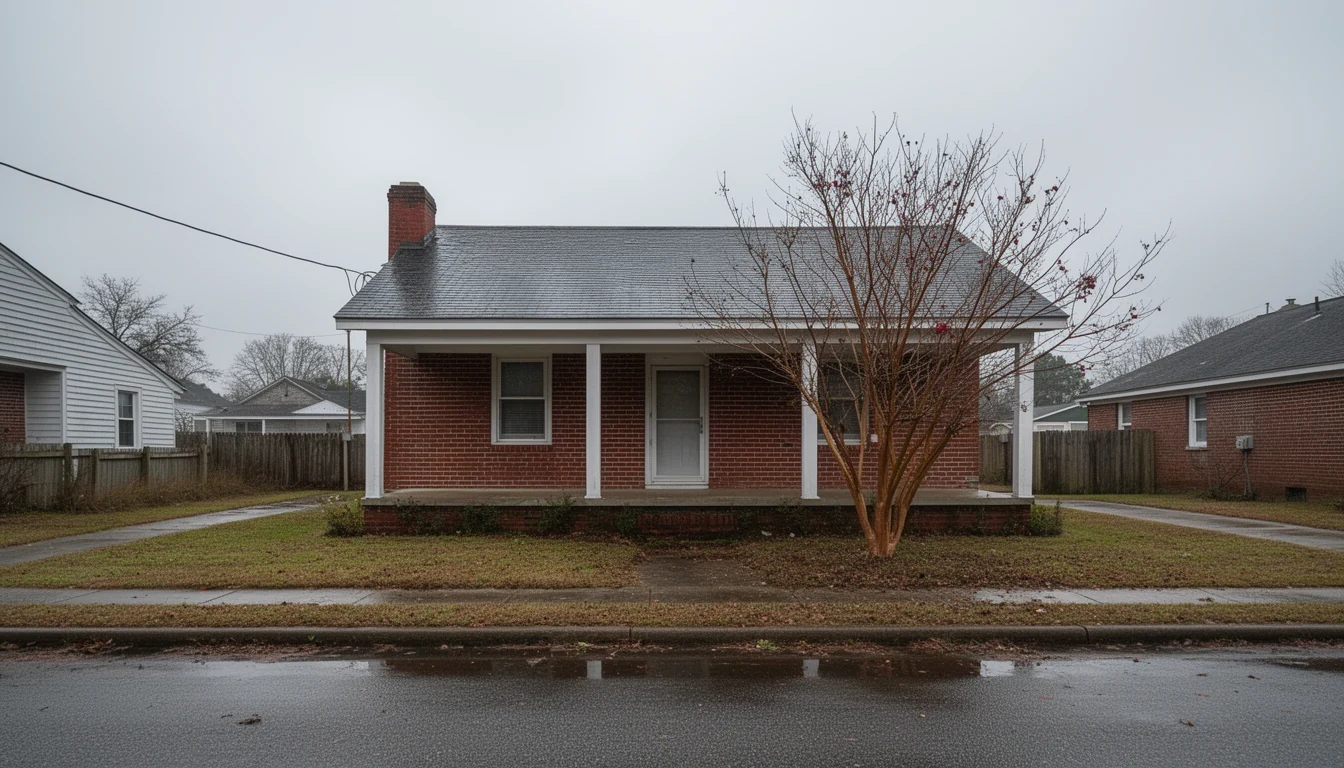
The declarations page printed out on the kitchen table next to a mug going cold. Rain came off the gutter in one steady line and hit the porch boards. Two percent, the page said, in a box labeled windstorm or hail deductible. The flat $1,000 deductible sat right above it for everything else. The house was brick, built in 1948 on Riverside Avenue, four blocks from a creek that has been out of its banks in my lifetime. The buyer had already decided she loved it.
She had not read that box. Almost nobody does.
We compare premiums across three quotes and glance at the deductible, because a deductible sounds like a number you will never use. On the coast it is a number you may use once and remember for twenty years.
Two deductibles on one policy
A homeowners policy normally carries one deductible for most perils. Wind gets carved out here, and the North Carolina Department of Insurance says so plainly on its own consumer page. Windstorm and hail coverage may be excluded from the primary policy depending on where the house sits and how the company underwrites it. When the coverage stays in the policy, the wind deductible is usually written as a percentage of the Coverage A dwelling limit rather than a flat dollar amount.
That percentage is calculated on the insured value of the house, not on the damage. This is the part that surprises people. The Department of Insurance gives two worked examples: a 2 percent deductible on a home insured for $300,000 comes to $6,000, and a 1 percent deductible on $200,000 of coverage comes to $2,000.
Run the same arithmetic on an Elizabeth City house insured for $260,000. One percent is $2,600. Two percent is $5,200. Five percent is $13,000. Now picture a claim for eight thousand dollars of torn shingles. At the 5 percent figure you pay all of it yourself and the policy never opens.
The clock starts when a storm gets a name
A named storm deductible is not the same animal as the everyday wind deductible, and the trigger is narrower than most owners assume. According to the Department of Insurance, the named storm deductible applies to windstorm or hail loss starting when an advisory, watch or warning for a named storm is issued for any part of North Carolina. It stops 24 hours after the last watch or warning ends or the last advisory is issued, whichever comes later.
Read that again. Any part of the state. A hurricane warning hoisted for the southern coast starts the window for a house on the Pasquotank, even if the storm never turns north. So the same blown-off ridge vent can fall in two different boxes depending on the calendar, and those boxes can carry different numbers.
Which means a plain nor’easter, the kind that pushes water up the river every few winters without earning a name, is handled under the wind and hail box. Ask your agent to point at both boxes on the page and read you the percentage in each.
Sometimes the wind is not in the policy at all
Here the local market gets more interesting than the national template. Windstorm and hail coverage is sometimes excluded entirely, and the owner buys a separate wind and hail policy to sit alongside the main one. The Department of Insurance notes that this separate coverage is often written by the North Carolina Insurance Underwriting Association, better known as the Coastal Property Insurance Pool, and that eligibility for it requires an active primary policy from an admitted carrier in the state that excluded windstorm in the first place.
Two policies, then. Two deductibles. The deductible on the wind policy is not the deductible on the homeowners policy, and quotes that look comparable in premium are sometimes not describing the same coverage at all. The question to ask is dull and decisive: is wind inside this policy, or outside it, and what is the deductible on whichever policy carries it?
Flood is separate, and it waits
Wind and flood are different policies sold by different programs, and the dividing line between them is where claims get argued. Rain that comes in through a failed roof is a wind claim. Water that rises from the creek and comes through the door is a flood claim.
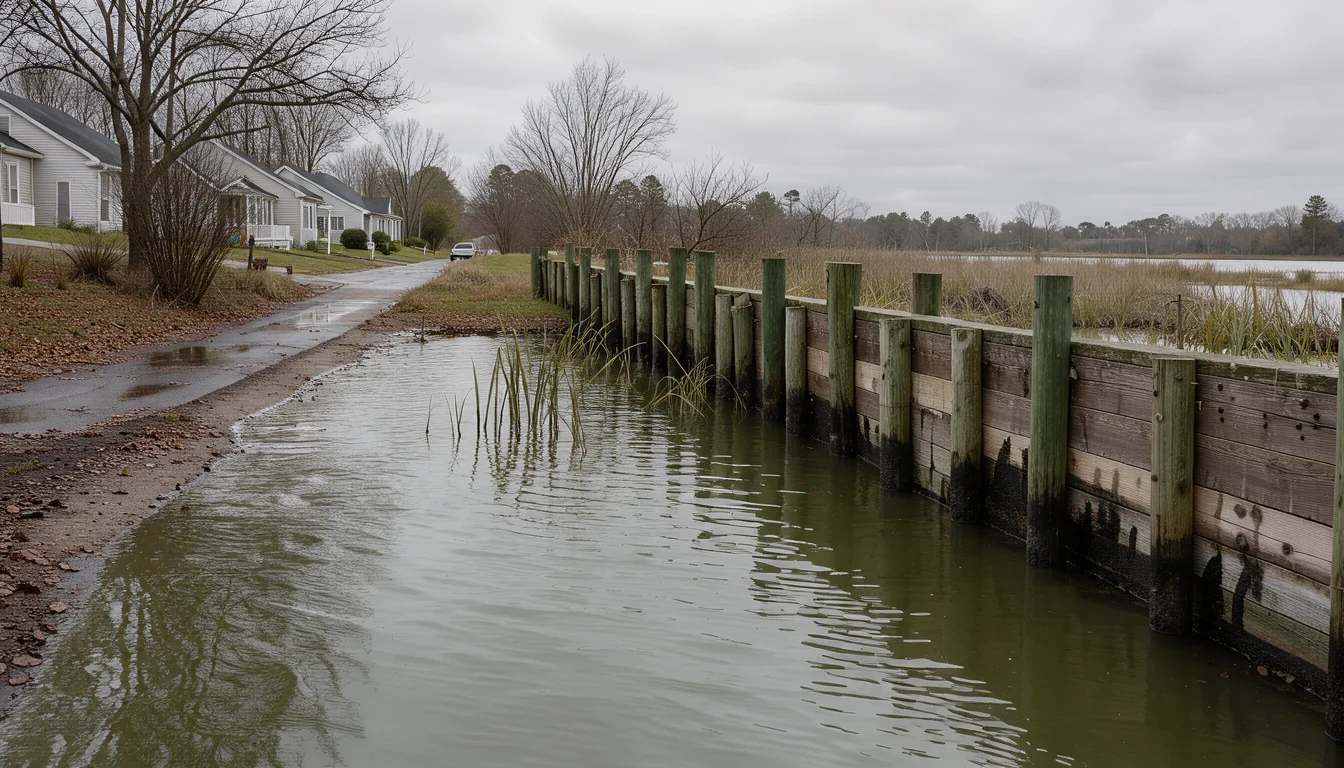
Federal flood policies generally take effect 30 days after purchase. FEMA’s own fact sheet names one exception, when the policy is bought because a lender requires it. That 30-day clock matters more here than most buyers expect, because Pasquotank County’s current flood maps took effect in December 2018 and moved a large number of properties out of the high-risk zone. FEMA reports that about one third of flood claims between 2014 and 2024 came from properties outside current high-risk zones. Charles Creek does not consult the map. Neither did Hurricane Isabel, which pushed roughly five feet of surge up the Pasquotank in September 2003.
So the house can sit in a Zone X that no lender will question and still take water on a northeast wind. The map decides whether insurance is required. The creek decides whether you want it.
What it does to a $260,000 house
Put the whole carrying cost on one line and the deductible stops looking like a footnote. Pasquotank County’s rate is $0.67 per $100 of assessed value for this fiscal year, and Elizabeth City adds $0.59, for a combined in-town rate near $1.26. On a $260,000 house inside the city that is about $3,276 a year in property tax.
Drop from a 5 percent wind deductible to a 2 percent on the same house and you cut $7,800 of exposure, which is more than two years of city and county tax paid in one afternoon if the storm finds you. Go to 1 percent and the exposure falls to $2,600, a number most households can actually raise on short notice.
The trade runs the other way too, and it is worth saying out loud. A lower percentage usually costs more premium every month, whether or not a storm ever comes. A higher percentage buys a cheaper policy and hands the first several thousand dollars of damage to your savings account. There is no universally right answer. There is only the answer that fits the cash you can put your hands on in a week.
What to ask before the due diligence period ends
Ask the agent for the declarations page, not the premium. Read the deductible boxes, both of them, and write the percentages down.
Ask whether wind sits inside the homeowners policy or outside it in a separate policy, and get the deductible for each.
Ask what the carrier wants to know about the roof. Age, covering, and whether anyone has filed a claim at that address come up in underwriting, and a 1948 house with a newer roof is a different conversation than the same house with the original decking.
Ask every carrier for a quote at the same Coverage A limit. A quote written at $240,000 will beat a quote written at $280,000 on premium and leave you short on the rebuild, and the deductible percentage hides that difference neatly.
Ask about wind mitigation credits while you are on the phone. Roof shape, roof covering and opening protection all get priced in this market, and the credit is sometimes larger than the discount a buyer negotiates on the sales price.
Get the flood quote the same week you get the wind quote. Thirty days is real, and the due diligence period is shorter than that.
Outside, the rain finally quit and the gutter kept dripping for another hour, the way gutters do. The house was still a good house. The number in that box just needed to be part of the decision instead of a surprise after it.
Keep reading
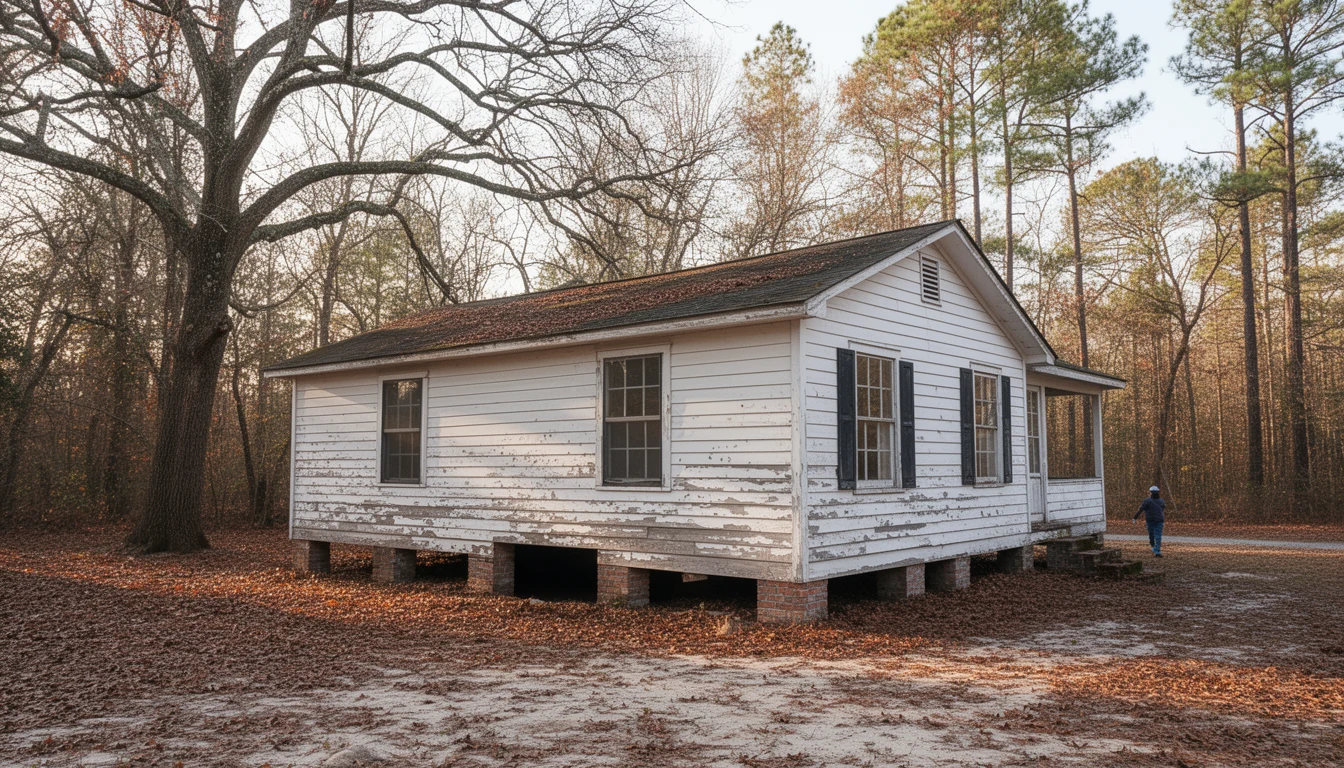
8 Systems to Check on a Pre-1960 Elizabeth City House
Eight systems where pre-1960 Elizabeth City houses differ most, from knob-and-tube wiring to cast iron drains, and what repairs really cost.
Flood Zones on the Pasquotank: What the Map Misses
Pasquotank's flood maps changed in December 2018 and pulled a lot of Elizabeth City out of the high-risk zone. Here's where the water still goes.

Elizabeth City New Builds: Permits and What to Verify
Building in Elizabeth City or Pasquotank County? Permits come from the city or the county, depending on the lot. What to verify on a new build.