
You have picked the lot, the plan, and the builder. Before you sign anything on an Elizabeth City new build, there is one question that decides almost everything else about the process: which government office inspects this house? The answer is not the same for every lot in Pasquotank County, and it does not depend on which side of town you choose. It depends on whether the lot sits inside Elizabeth City’s city limits or outside them in the county.
Here is the part that surprises most buyers: both offices work out of Elizabeth City. City permits come from the municipal office complex on the waterfront side of town. County permits come from the ground floor of the Pasquotank County Courthouse at 206 E. Main Street, a few blocks away. Same city, different governments, different paperwork, and different phone numbers to call when something stalls.
Who inspects a new build? It depends on the lot
Inside Elizabeth City city limits, the City of Elizabeth City is your permit office. New construction, additions, and structural repairs all need a building permit, and the Building Inspections Division of the city’s Development Services Department issues the permits and runs the inspections. The division employs two full-time Level 3 certified building inspectors and one inspector-in-training, inspections are done by appointment, and you can apply and schedule online through the city’s permit portal or call (252) 337-6672. Plans for a new house go to the city’s Planning Department, the Building Inspections Division, and the Elizabeth City Fire Department before a permit is issued.
Outside city limits, in unincorporated Pasquotank County, the county’s Planning & Inspections Department is your office. It handles zoning, subdivision, and floodplain work alongside permits and inspections, and it runs an online permit system, a public permit search, and online inspection scheduling. The office number is (252) 338-1144. New construction in the county also carries its own side requirements: septic approval from the county Environmental Health office for any new house, and a CAMA permit from the state’s coastal management office if you are building over the water or within 75 feet of it.
The practical lesson: when you are comparing a lot inside the city limits against acreage in the county, you are also comparing two different permit pipelines, two different sets of plan-review requirements, and two different offices to call when something stalls. Factor that into your timeline before you fall in love with one lot.
Is the builder actually licensed?
North Carolina law is blunt here. Under General Statute 87-1, any construction project valued at $40,000 or more requires a general contractor licensed by the state. A framed house on a slab clears that threshold before the first truck of lumber arrives, so the person holding your contract needs an active license, not a handshake and a good price.
Check it yourself before you sign. The NC Licensing Board for General Contractors runs a public license search on its website, nclbgc.org, where you can confirm the builder’s name and license number and see whether the license is active. License class matters too. A limited license caps a contractor at individual projects up to $750,000, an intermediate license at $1.5 million, and an unlimited license has no dollar cap, so a large custom build needs a contractor whose license class covers that number.
One more line item worth knowing: every single-family residential building permit in North Carolina carries a Homeowners Recovery Fund fee. That fund exists to reimburse owners for certain financial losses caused by licensed contractors who fail to perform. It is not a substitute for vetting the builder, but it is a layer of protection that exists because the state knows construction disputes happen.
Transparency belongs here: Travis Old, the broker behind this site, is a licensed North Carolina general contractor himself, license #99504, and a principal of Two Sons Construction, the company he runs with Lane Peterson building new homes and renovations across northeastern North Carolina. This article is not a ranking of builders, and the checklist below applies to Two Sons exactly as it applies to anyone else. The point is that the license check, the permit history, and the certificate of occupancy are public records, and a buyer who verifies them is doing what the state intends.
What does the city or county actually inspect?
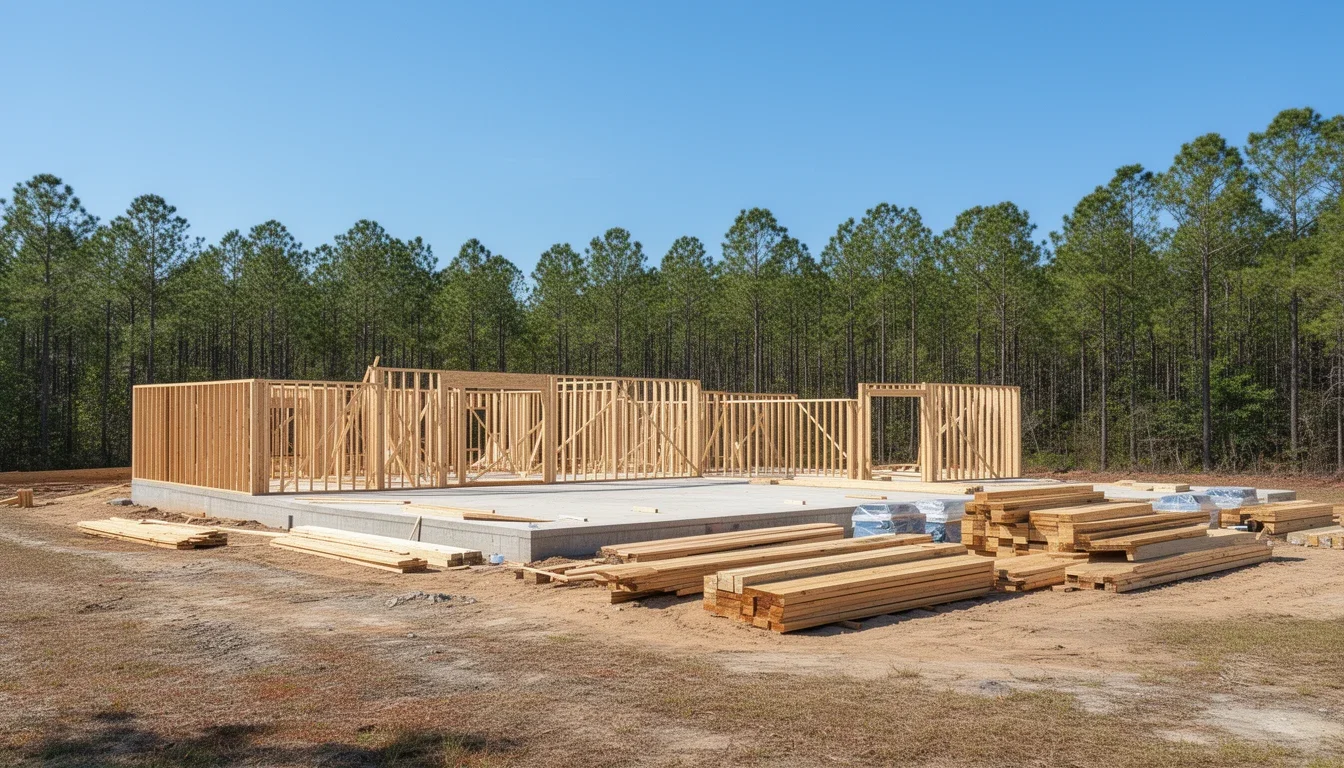
Both offices inspect against the North Carolina State Building Code, and the sequence follows the construction process. Expect inspections at the footings, the foundation, the framing, the rough-in of electrical, plumbing, and mechanical work, the insulation, and finally the completed house.
Elizabeth City adds local rules on top of the code. Fences six feet or taller have needed a building permit since July 1, 2025. Accessory buildings more than 12 feet in any direction are treated as structures that need permits of their own. And if work starts without the required permit, the city can issue an eight-hour termination notice and add fines, which is a polite way of saying the office can shut the job down the same day. In the county, the same discipline applies through the county permit system, and the county publishes its own residential and commercial fee schedules and printable permit forms.
The certificate of occupancy is the finish line. It is issued only after the final inspection passes, and it is the document that says the house is legal to live in. Do not schedule a closing that depends on a certificate of occupancy that has not been issued yet. In new construction, the CO date slipping is one of the most common reasons a closing date moves.
What should you verify before closing on a new build?
Beyond the permit history, a new construction closing deserves its own checklist, because the usual resale safeguards work differently when nobody has lived in the house yet.
First, confirm the certificate of occupancy exists and the final inspection has passed, with no open or expired permits on the property. Pasquotank County’s public permit search lets you look this up yourself, and your closing attorney can confirm it in writing before you wire money.
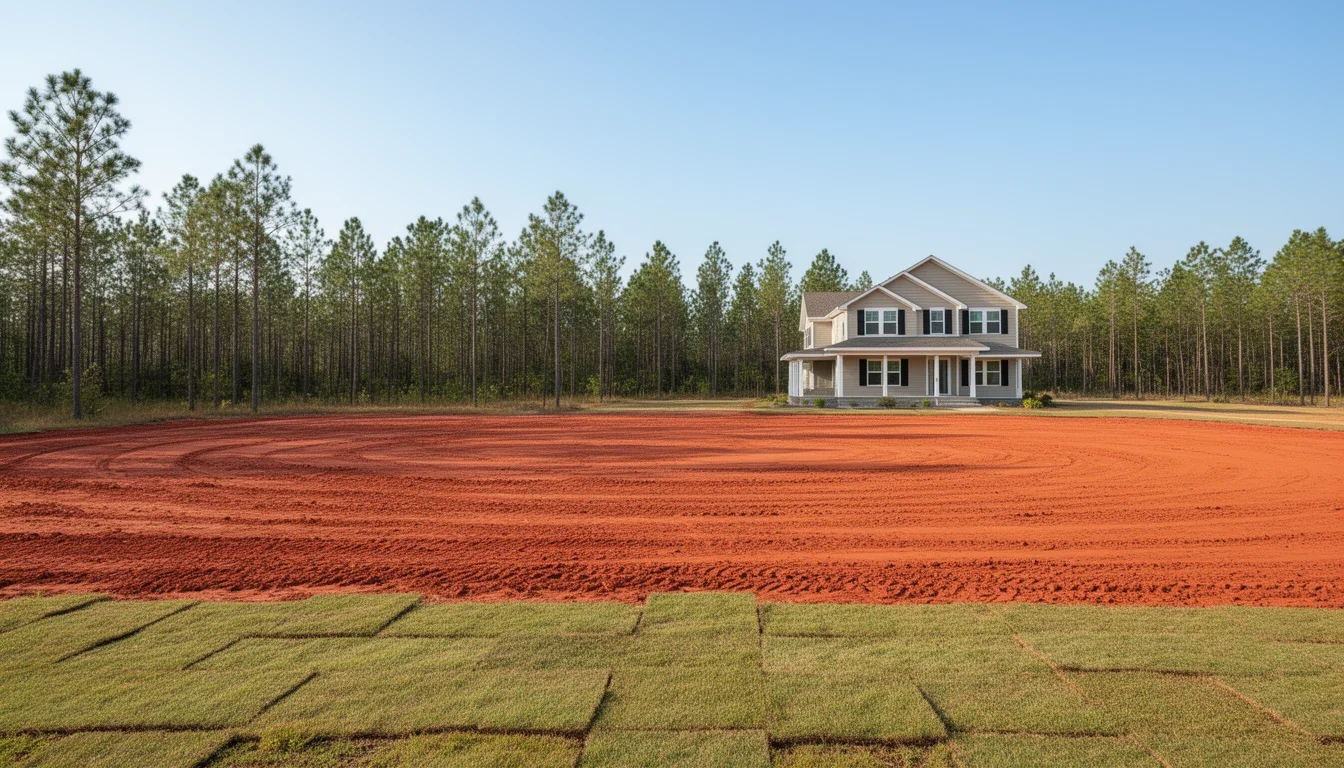
Second, do a real walkthrough with the builder and put everything on a punch list. This is your only chance to catch the nail pops, the cabinet door that does not close, and the grading that was supposed to be finished before the crew moves to the next house. Get the punch list signed and agree on a completion date in writing.
Third, read the warranty document like a contract, because it is one. Builder warranties vary in what they cover and for how long. Know whether the structural coverage is separate from the workmanship coverage, what the claim process requires, and what is excluded. If a provision is vague, ask the builder to clarify it in writing before closing, not after a leak shows up in year two.
Fourth, confirm which government actually permitted the house. Around Elizabeth City the city limit line does not follow obvious landmarks, and annexation has moved it more than once. A lot that looks like it is in the county can sit inside the city’s extra-territorial jurisdiction, and vice versa. Verify the parcel against the tax records for the office you think permitted it, and make sure the permit history matches the address on your contract.
Fifth, if the lot is outside city limits, ask early about water and sewer. A county lot may mean a private well and septic system, which adds separate permitting, testing, and cost layers that a city water and sewer tap does not. That is normal for Pasquotank County acreage, but it belongs in your budget from day one, not learned at the financing stage.
Is a new build the right call in Elizabeth City?
The honest trade-off: new construction buys you a house nobody has worn in yet, with modern systems and a builder warranty, but it also buys you builder timelines, change orders, and a market where the comparable sales may be thin because the subdivision is still filling in. A resale in an established Elizabeth City neighborhood gives you a track record of how the roof, the grading, and the neighbors behave, in exchange for older systems and someone else’s layout choices.
Financing can tip the scale. USDA eligibility is drawn around town boundaries, so a new build on acreage outside the city limits can open a financing door that the same house inside the limits cannot, though program maps change and eligibility should always be checked against current USDA maps for the specific parcel.
What a new build should never be is a leap of faith. The permit office, the license check, the inspection schedule, the CO, and the punch list are all public, documented steps. A buyer who verifies each one before closing is not being difficult. They are being smart about the largest purchase they will make, in a county where the office that protects them depends on which side of the city limit the lot sits.
Talk to us at Horizon Realty Group when you are ready to shop new construction in Elizabeth City or anywhere in Pasquotank County. We know which lots are in the city, which are in the county, and what the permit pipeline looks like before you fall for a rendering.